
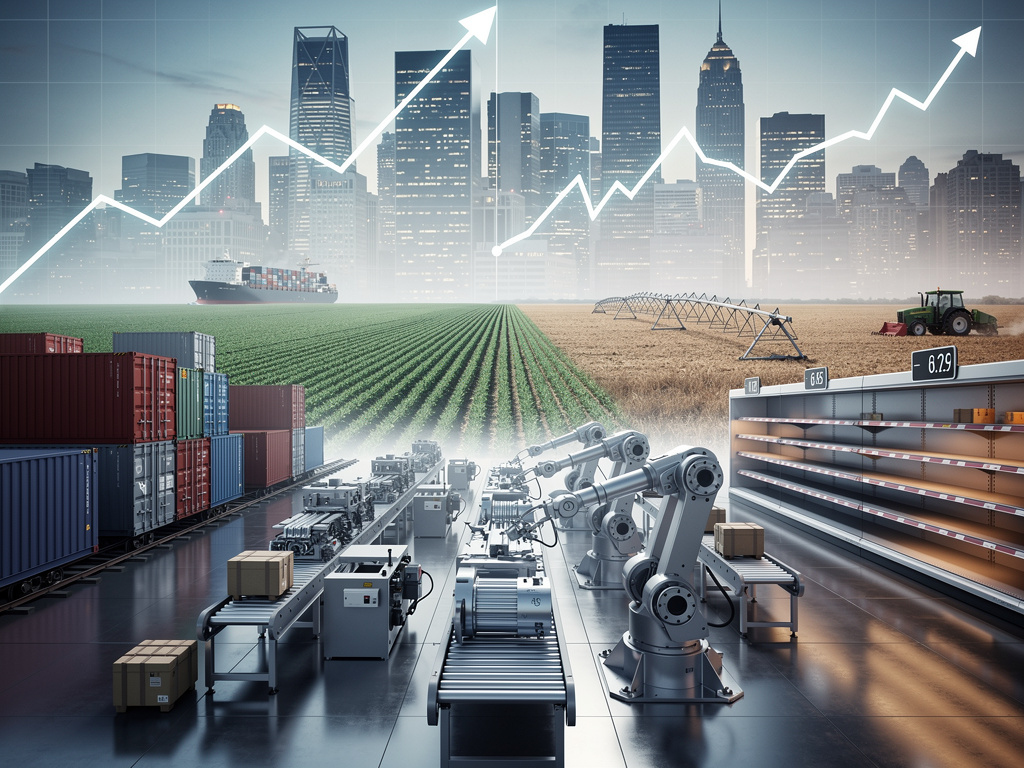
Trump Derailed: Not long ago, the United States appeared to be on the brink of a manufacturing boom. Federal investments in infrastructure, clean energy, and advanced industry fueled demand for American‑made materials and products. Employers broke ground on new factories, expanded existing plants, and added more than 700,000 manufacturing jobs nationwide.
Yet, after returning to office in 2025, Trump reversed much of this momentum. Instead of building on the progress he inherited, he imposed an economic agenda driven by vendetta, not by workers’ interests.
The Promise of a Manufacturing Surge
Before Trump’s latest term, federal programs such as the Infrastructure Investment and Jobs Act (IIJA) and the Inflation Reduction Act (IRA) created a stable environment for industrial investment. In turn, companies planned major expansions—from lithium‑battery plants to hydrogen hubs—jobs multiplied, and many communities expected a reinvigorated middle class.
Moreover, strong demand for steel and cement meant stable work for miners and plant workers. For example, in Minnesota’s Iron Range, union members celebrated wage gains and looked forward to a long‑term industrial future.
Trump ’s Policy Turn: From Boom to Backlash
However, after taking office again, Trump began to unravel that progress. He cut funding for job‑creating projects not because of economic necessity, but to punish people, places, and policies he disliked. This included clawbacks from the IIJA and IRA, which had already been allocated to factories, energy hubs, and infrastructure schemes.
As a result, companies shelved or canceled billions in projects. For instance, Kore Power canceled a $1.2 billion lithium‑battery plant in Arizona that would have created thousands of jobs. In California, a hydrogen hub lost $1.2 billion in federal support, leaving local officials scrambling for alternatives.
Similarly, Libbey Glass in Toledo, Ohio, saw tens of millions in support pulled for new, modern furnaces. These units would have secured jobs and competitiveness for decades, yet Trump’s decision undermined that plan.
Trump ’s Trade War and Industrial Fallout
Beyond funding cuts, Trump intensified his trade‑war tactics, using tariffs and sanctions as tools of retaliation rather than economic strategy. He targeted countries and leaders over political disputes—such as Greenland or energy disagreements—rather than focusing on long‑term industrial competitiveness.
This constant threat of “here today, gone tomorrow” sanctions made it hard for companies to plan investments. Factories, suppliers, and construction projects needed stable trade rules, yet they instead faced unpredictable tariffs and retaliations.
For example, Trump ’s trade war reduced demand for steel made from Iron Range taconite, leading to over 600 miner layoffs. Schools, local services, and small businesses in the region also felt the strain. Similar cuts rippled through other sectors, including truck manufacturing and heavy equipment, where companies such as Mack Trucks, Volvo, and John Deere cut hundreds of jobs citing higher input costs and policy uncertainty.
Trump ’s Leadership and the Job‑Killing Climate
Although Trump repeatedly promised to “create millions and millions of jobs,” the data tell a different story. Manufacturing employment has declined for several consecutive months, while companies report shrinking headcounts and postponed projects.
Moreover, his funding decisions often conflicted with his own rhetoric. While he touted “Made in America” initiatives, he also canceled or delayed projects that would have directly created factory jobs and strengthened supply chains.
Why Stability Matters for Industry
Industries thrive on predictability. When governments commit to long‑term infrastructure, energy, and manufacturing plans, companies feel confident investing in new facilities, machinery, and personnel. Without that stability, projects stall, and workers lose opportunities.
In construction, steel, and equipment sectors, this unpredictability has led to slower hiring, delayed upgrades, and reduced capital expenditure. For example, cement producer Heidelberg Materials had already begun a modernization project at its Mitchell, Indiana plant when federal funding was suddenly withdrawn. The project would have supported more jobs and improved supply‑chain resilience, yet Trump ’s decision left workers and local partners in limbo.
Trump ’s “America First” Policies and Global Supply Chains
At the same time, some of Trump ’s “America First” measures have increased costs for manufacturers. Tariffs on steel, aluminum, copper, and other inputs raise the price of basic materials, making U.S. production more expensive.
Research shows that while such tariffs can briefly protect certain domestic industries, they often lead to net job losses elsewhere in the manufacturing sector. When factories pay more for raw materials, they must either absorb the costs—which squeezes profits—or cut back on hiring and investment.
From a global perspective, firms that rely on U.S. components—such as automotive, construction equipment, and industrial machinery—must also adjust. Some companies are forced to diversify sourcing, move production to other regions, or redesign components to reduce reliance on tariff‑exposed inputs.
Lessons for Greek and European Manufacturing
Although the ZNetwork article focuses on the U.S., its lessons are relevant for Greek and European manufacturers. When major political decisions create sudden policy swings, factories, suppliers, and building projects face uncertainty.
For example, any country that relies on imported materials or exports manufactured goods must guard against protectionist shocks. In construction and industrial design, firms that work with steel, concrete, glass, and advanced materials need stable trade rules and long‑term planning frameworks.
Our Work
In Greece, companies such as our company WORX, focus on precision sheet‑metal fabrication, structural steel, and project‑specific manufacturing solutions. Our past projects page shows how careful planning, stable client relationships, and technical expertise allow us to deliver complex industrial and construction components—even in turbulent markets.
The Trump ‑ driven manufacturing slowdown highlights why local manufacturers and contractors must prioritize flexibility, diversification of suppliers, and strong partnerships with engineering and design firms.
How Design and Planning Can Help
For industrial and construction projects, early‑stage planning can mitigate some of the risks posed by trade and policy volatility. By choosing materials efficiently, optimizing structural designs, and working with local fabricators, developers can reduce dependence on imported components and compressed supply‑chain links.
Moreover, governments and municipalities can support manufacturers by maintaining transparent, long‑term investment roadmaps. When infrastructure, energy, and industrial policies are predictable, businesses can commit to hiring, training, and upgrading facilities without fear of sudden funding reversals.
Rebuilding Confidence in Manufacturing
Trump ’s spite‑driven agenda has derailed what could have been a sustained manufacturing boom. Funding clawbacks, retaliatory tariffs, and a focus on political scores rather than economic stability have cost tens of thousands of jobs and delayed critical industrial projects.
For designers, contractors, and manufacturers around the world, this experience underscores the importance of policy stability, long‑term planning, and resilient supply chains.